

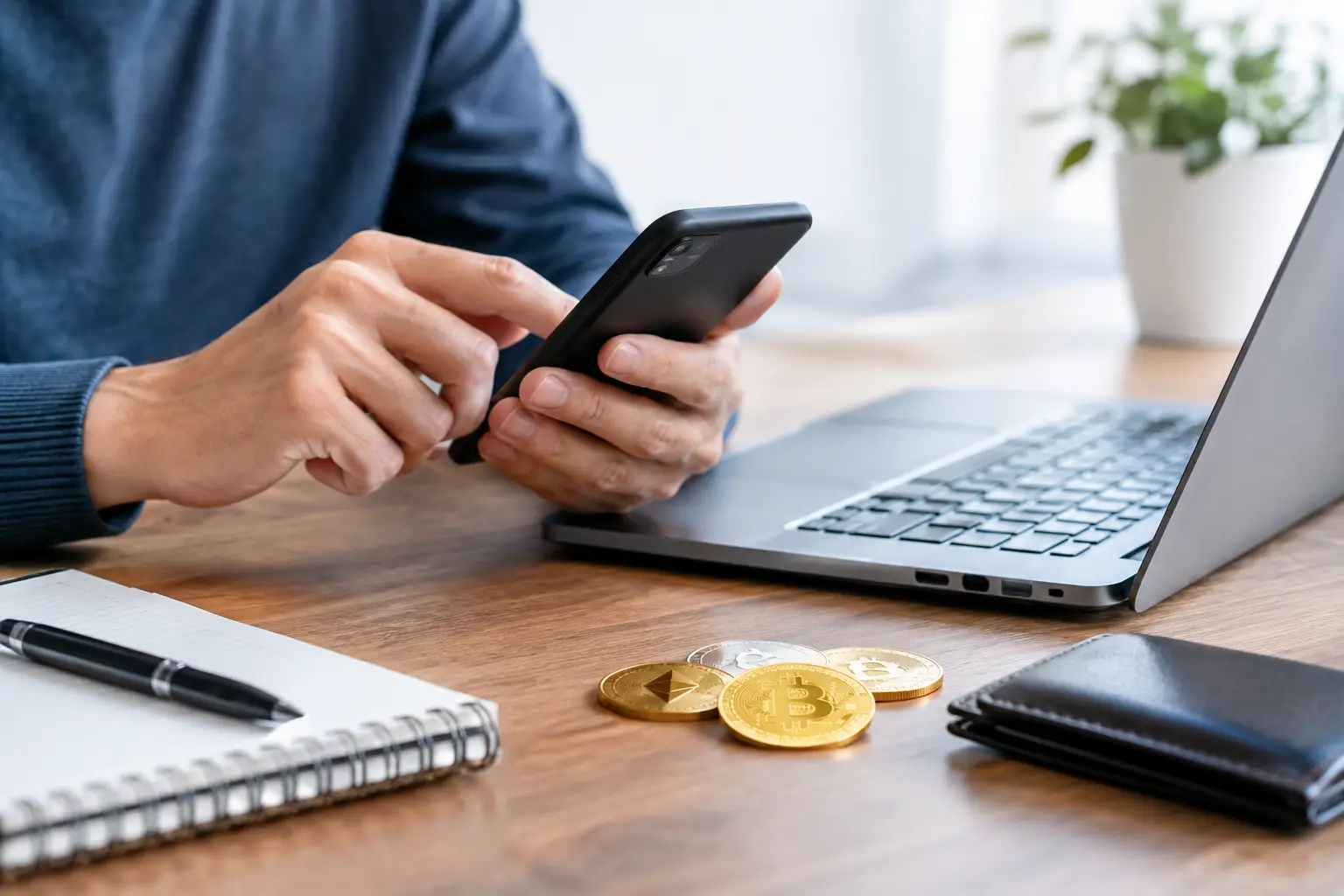
A fraudulent crypto transfer can move from one wallet to another in minutes, but the underlying record does not disappear. Knowing how to report crypto fraud promptly and preserve the right evidence can materially improve the quality of a law enforcement referral, exchange review, or forensic tracing effort.
The immediate objective is not to solve the case alone. It is to stop further loss, create a verifiable record, and give investigators enough detail to follow the asset trail across wallets, exchanges, payment channels, and related accounts.
Act Before Evidence Changes
If you still have access to the account, wallet, email address, phone number, or exchange profile involved, secure it first. Change passwords from a trusted device, enable multi-factor authentication, revoke unknown wallet connections, and notify the exchange or platform that facilitated the transfer. Do not use a link sent by the suspected fraudster. Navigate directly to the official platform through a known, trusted route.
Contact the exchange immediately if the assets were sent to an address associated with its service or if the fraud occurred through its platform. Provide the transaction hash, receiving address, asset type, amount, date and time, and your account details. Ask the platform to preserve relevant account records and review whether it can restrict withdrawals from a suspected destination account. An exchange may not be able to reverse an on-chain transaction, but speed can matter if assets have not yet been moved onward.
Do not continue communicating with the person who defrauded you in an attempt to negotiate a return. Fraud operators often use that contact to apply pressure, collect more personal information, or introduce a second payment demand. Preserve the messages, then disengage.
Preserve a Complete Evidence File
A useful report is specific, chronological, and supported by original records. Screenshots are helpful, but screenshots alone are rarely enough. Keep original emails, text-message exports, chat logs, account statements, payment confirmations, and files exactly as received. Avoid editing images or renaming originals in a way that obscures when they were created.
Create a written timeline while details are fresh. State how contact began, what was represented, every payment requested, the platforms used, and when you realized the activity was fraudulent. Separate what you personally observed from what the other party claimed. That distinction helps preserve evidentiary clarity.
Your evidence file should include the following records where available:
- Wallet addresses used to send, receive, or route the assets
- Transaction hashes, also called transaction IDs, for every relevant transfer
- The blockchain network, asset name, amount, date, time, and time zone for each transaction
- Exchange deposit or withdrawal confirmations, account identifiers, and support-ticket numbers
- The website addresses, social-media profiles, phone numbers, email addresses, advertisements, and usernames used by the suspected fraudster
- Bank, card, wire, or payment-app records showing how funds were converted into cryptocurrency or sent to a platform
Keep a copy of this material in more than one secure location. If a mobile device or computer may contain original communications, do not wipe, reset, or casually modify it. The device itself may retain timestamps, browser records, wallet connection history, and other context that is not visible in a screenshot.
Verify the Blockchain Record Without Overstating It
Public blockchains provide a form of architectural transparency. A transaction can often be independently checked by entering a wallet address or transaction hash into a blockchain explorer. For Ethereum and compatible networks, Etherscan can display transaction status, token transfers, contract interactions, block confirmation details, and wallet activity. Blockchain.com can be useful for reviewing Bitcoin transaction records. SoChain may assist with records across several supported blockchain networks.
Record what the explorer shows at the time you review it: the full transaction hash, sending and receiving addresses, block number, timestamp, asset quantity, and transaction status. Capture the explorer result along with the exact network being searched. A token transfer on one network is not interchangeable with a similarly named asset on another network.
Explorer data establishes that a transaction occurred on a given ledger. It does not, by itself, establish the real-world identity of a wallet owner. A wallet label, social-media claim, or address appearing in a chat message may be relevant, but it should be treated as an investigative lead rather than proof of identity. Accurate reporting requires that distinction.
Where fraud involves multiple transactions, map each movement in sequence. Identify the initial source of funds, the wallet you sent to, subsequent transfers, apparent consolidation points, and any deposits into identifiable services. Sophisticated fraud schemes may move assets through numerous addresses, swap assets through decentralized services, or route funds across chains. These steps can complicate analysis, but they leave records that can be examined in context.
How to Report Crypto Fraud to the Right Authorities
For U.S. victims, it is generally appropriate to report a cryptocurrency scam to more than one authority because each organization receives different information and serves a different function. Filing a report is not a guarantee of asset recovery. It does, however, create a record that may connect your matter to a broader pattern, support requests for records, and assist coordinated enforcement activity.
Start with the FBI’s Internet Crime Complaint Center, commonly called IC3, particularly when the fraud involved online communications, investment impersonation, account compromise, extortion, romance fraud, or a significant financial loss. Provide a concise narrative and attach or retain the transaction details, wallet addresses, platform information, and communications.
Report consumer fraud to the Federal Trade Commission through its fraud reporting channel. If the conduct involved commodities, leveraged trading claims, or a purported crypto trading service, a report to the Commodity Futures Trading Commission may also be relevant. If the scheme centered on an alleged investment offering, token sale, or claims of securities-related returns, the Securities and Exchange Commission may be an appropriate recipient. These agencies assess reports within their respective jurisdictions, so the facts determine where a report belongs.
File a report with your local police or sheriff’s department as well. Some departments have limited capacity to investigate cross-border crypto fraud directly, but a local report can establish a documented loss and may be requested by banks, exchanges, insurers, or other agencies. Bring or provide a well-organized evidence package rather than a large, unstructured collection of screenshots.
If the fraud involved a bank transfer, card payment, payment app, or wire used to acquire or transmit funds, report the issue to that institution’s fraud department immediately. The payment trail before cryptocurrency was acquired can be as important as the blockchain trail after it was sent.
Avoid the Recovery Scam That Often Follows
People who have lost cryptocurrency are frequently targeted again by supposed recovery specialists, hackers, regulators, or law firms promising guaranteed returns. They may claim they have already located your funds, ask for an advance fee, demand crypto for “gas” or “release” charges, or request remote access to your device.
Treat guaranteed recovery claims as a serious warning sign. Legitimate investigative work should be clear about its scope, evidentiary limits, fees, and the difference between tracing assets and actually recovering them. No one can truthfully guarantee that blockchain assets will be returned.
Be especially cautious if someone contacts you unsolicited after you post about your loss online. Fraud networks monitor public complaints and often reuse stolen names, regulatory logos, and fabricated transaction reports to appear credible.
Make the Report Useful to Investigators
A short, factual narrative is more useful than a lengthy account built around assumptions. Identify the loss amount, the crypto asset and network, the relevant transaction hashes, the wallet addresses, the platform used, the method of contact, and the sequence of events. State whether you sent funds voluntarily because of deception, whether your account was accessed without authorization, or whether someone persuaded you to reveal credentials or recovery phrases.
Do not omit information because it feels embarrassing. Fraud operators rely on urgency, trust, apparent authority, and technical confusion. These tactics are relevant facts, not a reflection of the victim’s judgment.
Keep every report number, agency confirmation, platform ticket number, and copy of your submission. If new transaction activity appears, submit a supplemental update that references the original report. Consistency across reports matters, especially when several organizations may later compare the records.
Education is a practical shield against repeat fraud: learn to verify wallet addresses, platform domains, transaction records, and claims before transferring funds. When a transaction trail is documented carefully, tracking can uncover patterns that support law enforcement discovery and help connect an individual loss to a broader fraud operation.
Leave a Reply