

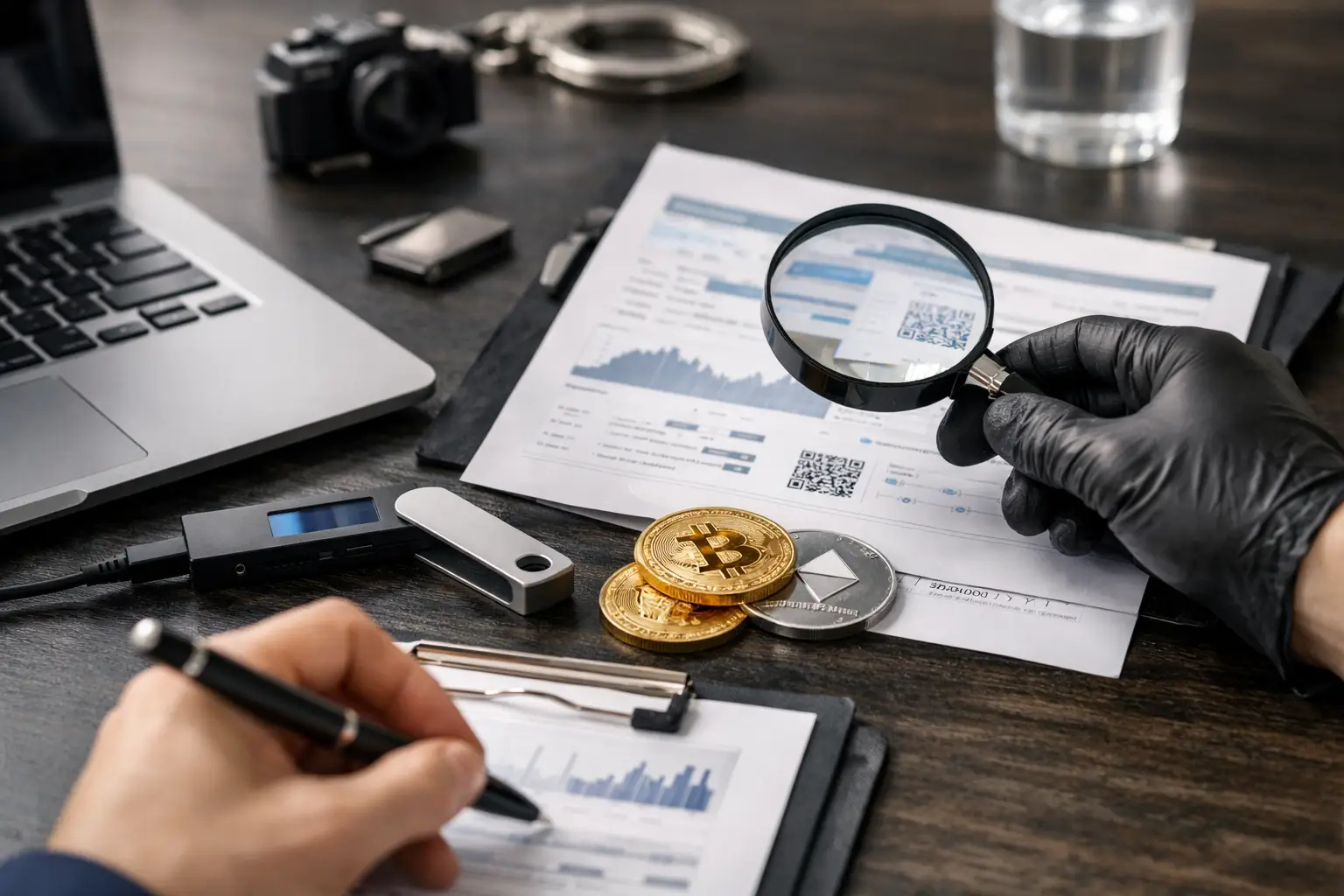
A scammer may empty a wallet in minutes, but the record of movement can remain visible long after contact ends. The first priority is to preserve wallet evidence before messages disappear, exchange sessions expire, devices are reset, or the scammer changes the story. A public blockchain is not a complete case file by itself, but it can provide a durable, independently verifiable record of transactions when it is documented correctly.
For people who have lost cryptocurrency to an impersonation scheme, fake investment platform, romance scam, or fraudulent support request, the instinct to act quickly is understandable. Speed matters. So does discipline. A hurried screenshot, an edited spreadsheet, or an unrecorded conversation can leave gaps that later make the transaction history harder to interpret.
What Wallet Evidence Actually Includes
Wallet evidence is more than a wallet address and a balance. It is the set of records that can establish what occurred, when it occurred, how the assets moved, and what representations caused the transfer. The strongest documentation joins blockchain data with off-chain records.
On-chain evidence commonly includes sending and receiving wallet addresses, transaction hashes, dates and times, asset type, amount, network, block number, and confirmation status. Depending on the chain, it may also include smart contract interactions, token approvals, gas fees, internal transactions, and event logs. These details allow an investigator to test whether a claimed transfer corresponds to the ledger record.
Off-chain evidence provides the surrounding context. This may include screenshots of the platform or wallet interface, chat logs, emails, text messages, social media profiles, payment receipts, exchange deposit and withdrawal records, scam website URLs, and notes describing each interaction. A transaction hash can show that funds moved. The associated communications may help explain why the victim sent them.
Neither category should be treated as a substitute for the other. A conversation can be fabricated or incomplete, while a blockchain entry may not identify the person controlling an address. Together, the records provide a more coherent evidentiary picture.
How to Preserve Wallet Evidence Without Altering It
Begin by creating a working record, but keep original material unchanged wherever possible. Download original emails and exchange statements rather than relying only on screenshots. Export chats when the platform permits it. Save images and files using descriptive names that include the date, source, and a brief description, such as `2026-09-08_exchange-withdrawal-confirmation.pdf`.
For each blockchain transfer, record the full transaction hash exactly as displayed. Do not shorten it in a spreadsheet or replace it with a screenshot alone. Also record the sending address, destination address, blockchain network, asset transferred, amount, date and time shown by the service, and the URL or name of the explorer used to view it. The explorer URL is useful for your records, but the transaction hash remains the central identifier.
Public explorer tools can help verify entries independently. Etherscan is commonly used for Ethereum and compatible network activity. Blockchain.com can be useful when documenting Bitcoin transactions, while SoChain supports visibility across several networks. These tools display ledger information that can be checked again later, but interfaces and labels may change. Preserve the underlying identifiers, not merely what the page looked like on one day.
Capture a screenshot of the relevant explorer page as a supporting reference. Include the browser address bar, the full transaction hash where visible, and the date and time of capture. Then save a PDF printout if available. The screenshot helps show what was observed; the hash permits independent verification against the public ledger.
Do not edit, annotate, crop, or mark up the only copy of a screenshot. If annotations are helpful, make a separate working copy labeled as annotated. This distinction matters. Original evidence and explanatory materials serve different purposes.
Record the Timeline While Details Are Fresh
A chronological timeline often becomes the backbone of a fraud report. It should start before the first transfer. Note when the initial contact occurred, which platform was used, what the scammer claimed, when accounts were opened, each transfer requested, and every later demand for fees, taxes, verification payments, or release charges.
Use direct language and separate facts from assumptions. “I sent 0.45 ETH to this address after receiving a message requesting a verification deposit” is a factual entry supported by records. “The recipient was definitely the scammer’s personal wallet” may be a reasonable concern, but it is an inference that requires further analysis.
Time zones deserve attention. An exchange may show local time, a blockchain explorer may show Coordinated Universal Time, and a messaging application may use device time. Record the time exactly as displayed and identify the source. Investigators can normalize time later; an undocumented conversion can introduce avoidable confusion.
Preserve the Connection Between Accounts and Transfers
Fraud cases frequently involve several systems: a bank account used to purchase cryptocurrency, an exchange account used to withdraw it, a self-custody wallet, a fraudulent website, and a recipient wallet on a public chain. Evidence should show the connection between those stages.
For example, an exchange withdrawal confirmation may identify the transaction hash and destination address. A bank record may show the purchase funding the exchange account. Messages may show instructions directing the victim to send to that address. Each record answers a different question. Combined, they can document a path rather than a set of isolated events.
If assets moved through a bridge, decentralized exchange, or token swap, preserve the associated transaction hashes for every visible step. These transactions can be technically complex. A token transfer may appear in event logs rather than in the primary value field, and an address may interact with a smart contract instead of directly with another personal wallet. Avoid assuming that a blank-looking transaction means nothing happened.
Do not send a small “test” transaction to the scammer’s wallet after the loss. It can complicate the record and create another transfer with no recovery value. Likewise, do not approve new token permissions, connect your wallet to unfamiliar sites, or provide seed phrases or private keys to anyone claiming they can trace or recover funds. Legitimate documentation does not require surrendering control of a wallet.
Maintain Evidence Integrity and Access Security
Store copies in at least two secure locations, such as an encrypted local drive and a protected cloud account. Use strong, unique passwords and multifactor authentication. If the compromised wallet remains connected to a suspicious application, do not use it for additional activity until you understand the exposure. Evidence preservation and account security should proceed together, but they are not the same task.
Create a simple evidence log listing each item, its original source, the date you obtained it, and where it is stored. If you send records to law enforcement, an exchange, counsel, or a forensic service provider, record what was shared and when. This is not a formal chain-of-custody procedure in every circumstance, but it helps establish consistency and reduces the risk of overlooking material.
Be cautious about publicly posting wallet addresses, transaction hashes, or personal screenshots while seeking help online. Public ledgers are transparent, but tying a transaction to your identity can expose personal information and invite further targeting. A public post can also alert bad actors to the fact that their address has been noticed.
What Evidence Can and Cannot Establish
Blockchain architecture creates an unusual form of visibility. Transfers on many public networks are observable, timestamped, and linked through addresses. That transparency can reveal repeated patterns, transfers between connected clusters, movement into known service addresses, or attempts to convert one asset into another.
Yet transparency has limits. A wallet address is not automatically a legal identity. Attribution may require additional records held by an exchange, payment provider, platform, or other entity. Privacy tools, cross-chain movement, and intermediary services can make analysis more difficult. The appropriate conclusion depends on what the records support, not on what a victim understandably suspects.
This is where careful forensic tracing differs from simply looking up an address. The task is to map movement, test relationships, distinguish confirmed facts from analytical findings, and document methods clearly enough for another reviewer to understand the result. Veritas Ledger Services approaches public ledger analysis as an evidentiary exercise: the visible transaction is a starting point, while the surrounding ecosystem provides its meaning.
Education is a practical shield against repeat fraud. Preserve the original records, verify the ledger entries, and treat any new recovery promise with the same caution you wish had been available at the first contact. Transaction tracking can uncover patterns for law enforcement discovery.
Leave a Reply