

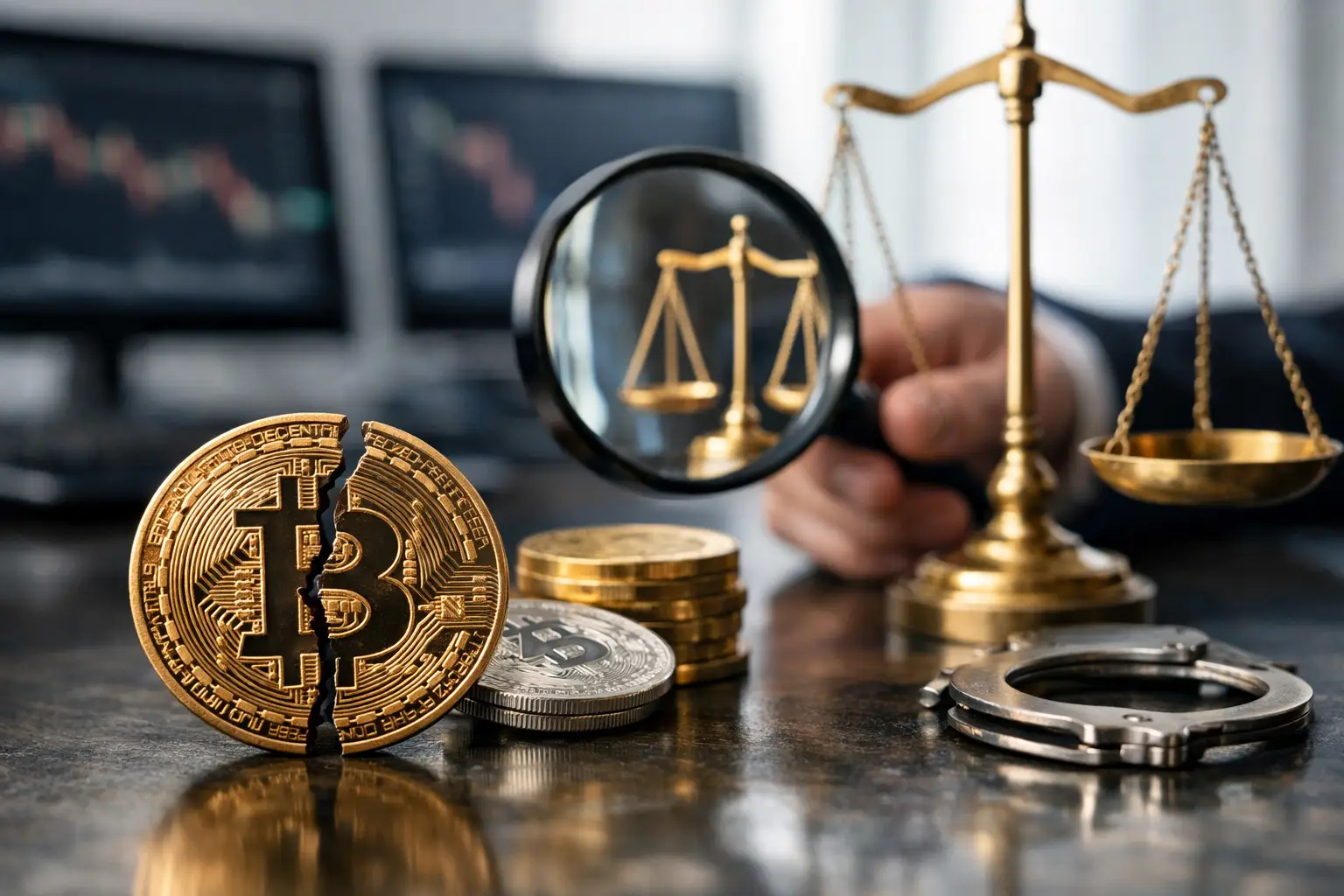
A scammer can disappear from a messaging app in seconds. The transaction record usually cannot. That distinction is central to crypto compliance after suspected fraud: the work of preserving, verifying, and interpreting the evidence left across public ledgers, platforms, and connected financial records.
For someone who has sent cryptocurrency to a fraudulent wallet, compliance may sound like an issue for exchanges and large financial institutions. It is broader than that. In an investigation, compliance-related records can help establish what happened, when it happened, which services may have touched the funds, and what information must be preserved before it is lost. The public ledger is not a complete answer, but it is often the beginning of a defensible transaction history.
What Crypto Compliance Means in a Fraud Inquiry
In a business setting, crypto compliance commonly refers to policies and controls designed to reduce financial-crime risk, meet reporting obligations, verify customers where required, and monitor suspicious activity. After a scam, the same underlying principles matter in a more immediate way: accurate records, reliable attribution boundaries, documented observations, and timely escalation.
A useful compliance inquiry does not begin by assuming that every unfamiliar address belongs to a criminal or that every transaction can be reversed. It begins with verifiable facts. What asset was sent? On which network? What was the transaction hash? Which wallet or exchange account initiated the transfer? Did the destination address move funds again, and if so, when?
Those questions convert a victim’s account of events into an evidence structure. That structure may support a report to an exchange, a law enforcement agency, legal counsel, or another appropriate authority. It can also expose gaps in the available record, such as an unpreserved chat, a missing deposit confirmation, or an unverified website that impersonated a legitimate service.
Why a Public Ledger Is Useful but Not Self-Explaining
Bitcoin, Ethereum, and many other networks publish transaction activity in a form that can be independently reviewed. Blockchain.com can be used to inspect Bitcoin activity, Etherscan can display Ethereum transactions and token transfers, and SoChain can assist with records on supported networks. These explorers provide direct access to the ledger’s architecture: addresses, transaction identifiers, timestamps, block confirmations, values, fees, and movement between visible wallets.
That transparency is significant, but it has limits. A wallet address is not automatically a person’s name. A transfer to an exchange deposit address does not, on its own, establish the identity of the account holder. Likewise, a label displayed by an explorer or an analytics service should be treated as an investigative lead unless its source and basis can be documented.
The difference matters. A credible finding separates what the ledger proves from what the evidence suggests. The ledger may prove that 0.5 ETH moved from Address A to Address B at a particular time. It may suggest a relationship between addresses when funds move in a repeated pattern. Identifying the individual or organization behind an address generally requires additional records, often held by an exchange, payment processor, telecommunications provider, or other third party.
Verification starts with the original transaction
Victims should preserve the source transaction before focusing on where funds went next. A transaction hash, also called a transaction ID, is the primary reference point. It should be matched to the correct network, asset, date, sender address, recipient address, and amount.
This sounds elementary, yet errors occur frequently. A scam victim may provide a token contract address rather than the transfer hash, confuse two similarly named assets, or examine a wallet on the wrong chain. Scammers also exploit confusing wallet interfaces, counterfeit token names, and fake balance displays. A record that cannot be tied back to the original transfer is difficult to rely upon.
Screenshots are useful context, but they are not a substitute for ledger verification. Preserve screenshots with the full screen, visible time and date when possible, and the relevant account or website details. Then compare what they show with the transaction data displayed through an appropriate blockchain explorer.
The Records That Strengthen a Compliance Review
A transaction trail becomes more useful when it is paired with the surrounding records. The goal is not to collect every document indiscriminately. It is to preserve material that establishes the chain of events and allows another reviewer to verify the work.
A well-organized file normally includes the transaction hashes and wallet addresses involved; exchange trade, withdrawal, and deposit confirmations; screenshots of communications with the suspected scammer; the relevant website addresses and social-media profiles; payment records for any related bank transfer or card purchase; and a dated chronology of events. If the scam involved a purported investment platform, preserve account statements, claimed profits, withdrawal denials, and requests for additional payments.
Original files should be retained whenever possible. Forwarded messages, cropped screenshots, or copied text can lose useful metadata and context. Keep a simple log of when evidence was collected, where it came from, and whether it has been altered for redaction or presentation. This is not paperwork for its own sake. It helps preserve the distinction between original evidence and an investigator’s interpretation.
Following Funds Without Overstating the Result
Scam proceeds may move quickly through several wallets. They may be swapped into another asset, sent through a decentralized exchange, consolidated with other deposits, or transferred to a centralized platform. Each step can be visible in part, although visibility varies by blockchain and service.
On Ethereum, for example, Etherscan may show native ETH transfers, ERC-20 token movements, contract interactions, and internal transactions. Reading those records accurately requires attention to transaction order, token contract addresses, and the function of the smart contract involved. A token transfer that appears as a simple outgoing payment may actually be connected to an approval, swap, bridge, or contract-driven distribution.
Analytical tracing looks for continuity. Does the receiving wallet send most of the funds onward shortly after receipt? Does it repeatedly receive similar deposits from unrelated addresses? Does it interact with a known exchange address or use a bridge to another network? These observations can help map the route of value, but they should be described precisely.
A movement pattern is not proof of a criminal identity. It may, however, identify a point where a regulated service could hold records relevant to an authorized inquiry. Timing is consequential. Exchanges and other custodial services may have procedures for fraud reports, law-enforcement requests, account restrictions, or record preservation, but their authority and response obligations depend on the facts and applicable law. A public report should never include private credentials, seed phrases, or more personal information than necessary.
Common Mistakes That Complicate Fraud Reports
The first mistake is delay. Blockchain records remain visible, but account access logs, chats, email headers, platform notices, and scam websites can change or disappear. Preserve evidence promptly and report suspected fraud through appropriate channels.
The second is paying a supposed recovery specialist who promises guaranteed results, insider access, or an immediate release of frozen funds. These claims often form a second scam. No legitimate investigator can credibly promise recovery based solely on an address, and no one should request a wallet seed phrase or private key to investigate a transaction.
The third is treating an explorer result as a final conclusion. Explorers are verification tools, not identity databases. Their value comes from transparent, reproducible ledger data. Proper analysis adds context, documents methodology, and states uncertainty where it exists.
Finally, do not attempt to contaminate the record by sending test payments to suspicious wallets, contacting suspected scammers from new accounts, or moving remaining assets at someone else’s direction. Such actions can create additional loss, confuse the timeline, and complicate later review.
A Defensible Path Forward
Crypto compliance is most useful when it turns confusion into a clear factual record. Start with the original transfer, preserve the associated communications and platform records, verify ledger activity on the correct network, and distinguish direct evidence from inference. If funds reach an identifiable service, record that fact with the transaction references and timing rather than relying on informal labels or assumptions.
Education remains one of the strongest shields against fraud. Anyone can learn to recognize a transaction hash, confirm a destination address on a blockchain explorer, and preserve evidence before a scammer can reshape the story. Careful transaction tracking cannot promise an outcome, but it can uncover patterns for law enforcement discovery and give a fraud report the factual foundation it needs.
Leave a Reply